Dec 2, 2025
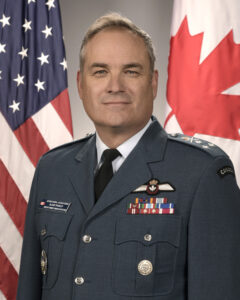
LIEUTENANT-GENERAL (RETIRED) BLAISE F. FRAWLEY, RCAF
Lieutenant-General (ret’d) Blaise Frawley joined the Canadian Armed Forces in 1985. He is an RCAF pilot with over 3000 hours on the F/A-18 Hornet including combat missions over the Federal Republic of Yugoslavia and Kosovo. He has held many staff, operational flying, command and overseas positions including an F/A-18 exchange tour with the USMC, Commanding Officer of 410 Sqn, Cold Lake AB, Commander of 17 Wing Winnipeg, the Combined Forces Air Component Commander for Exercise RIMPAC 16, the Director General of Space, Deputy Commander of the RCAF, the Deputy Vice Chief of the Defence Staff, and as the Deputy Commander of NORAD.
LGen (ret’d) Frawley is a graduate of the Fighter Weapons Instructor course and the Fighter Electronic Warfare Advanced Radar course. Additionally, he is a graduate of the Canadian Forces Command and Staff College in Toronto and the USAF Air War College at Maxwell AFB, Alabama. He holds a Bachelor of Military Arts and Sciences from the Royal Military College of Canada, and a Master of Strategic Studies from the USAF Air University. With over 40 years of service to his country, he retired from active-duty service in October of 2025.

Nov 10, 2025
A five members Panel will present CSIS on Thursday, 20 November.
We will gather at 1830 hours in the FFOM and the presentation will be delivered in Korea Hall at 1900 hours and conclude at 2030.
It will be remembered that 2024, marked the 40th, anniversary of the creation of the Canadian Security Intelligence Service from the former Royal Canadian Mounted Police, Security Service. It was created and came into force on July 16, 1984 following the Royal Commission of Inquiry referred to as the McDonald Commission.
The panel members discuss how they were recruited into CSIS, to a certain extent the path of their careers, the transition years of the Service, and will respond to questions from the audience. The audience may very well determine the direction of our discussions. We entertain all questions and will determine at the time if there is an area where we cannot discuss further.
CSIS Panelists:
Don Mahar

Donald G Mahar spent eight years with the RCMP Security Service and twenty years with the Canadian Security Intelligence Service in Canada and abroad. Upon retirement he spent a further six years working at Communications Security Establishment, where he worked extensively with the National Security Agency at Fort Meade, Maryland. In retirement, he held the position of National President of the Pillar Society, the CSIS retirement organization, for eleven years, and he established the CSIS National Memorial Cemetery situated at Beachwood Cemetery in Ottawa. He also founded and co-produced the Pillar Society Speakers Series which featured national security experts from across North America’s intelligence community as guest speakers. He ran it for eighteen years.
Mr. Mahar’s service has been primarily in Counter Intelligence where he was directly involved in the recruitment of legally mandated foreign hostile intelligence officers and other diplomatic personnel. He travelled extensively throughout his career and worked with intelligence professionals from all our Five Eyes partners as well as many other countries.
He had the privilege of serving in an Asian country at a pivotal time in its history, and that of the region, gaining much needed information for operational intelligence which could be applied to operations within Canada.
Mr. Mahar was selected by the Service to open its first ever post in East Africa which covered responsibilities in thirteen countries. As Head of Station, he was a member of the embassy management team and had a working arrangement with the Ambassador and the Immigration Program Manager. He also maintained close working relationships with the host country’s intelligence service as well as those other countries intelligence services with who he was accredited to.
During his final four years Mr. Mahar was engaged in Counter Terrorism investigations both in Canada and the Middle East. Mr. Mahar is the author of, Shattered Illusions: KGB Cold War Espionage in Canada
Dan Stanton
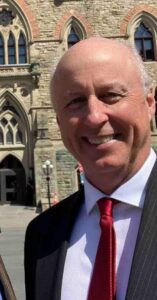
Daniel Stanton served for thirty-two years with CSIS, acquiring extensive experience in human source recruitment and management, both domestically and abroad. After the Service, he worked on contract to CSE for two years. Mr. Stanton is the director of national security and an instructor at uOttawa’s Professional Development Institute. He has coauthored an article on foreign intelligence for Foreign Policy Magazine and written op-eds on national security in The Hill Times, Toronto Star, and the Ottawa Citizen.He is a frequent commentator in the media on intelligence subjects.
Mr. Stanton testified at two House of Commons committees and a Senate hearing on foreign interference. He represented the Pillar Society with Standing at both phases of the Commission (Hogue) of Inquiry into Foreign Interference. He has a B.A. Honours in history and philosophy from Queen’s University. Mr. Stanton is writing a memoir, Seesoid: A Spy’s Perspective on Combatting Foreign Interference, University of Toronto Press, (Aevo).
Iwona Mooney

Iwona J. Mooney’s service in the Canadian federal government totalled 33 plus years, beginning with the then-Unemployment Insurance Commission (1970/71), the RCMP Security Service (SS) (1976-1984) and the Canadian Intelligence Security Service (CSIS) (1984-2008). Post-retirement she worked as a private security intelligence consultant with K&M Consulting for six years specializing in security breach and personnel harassment investigations for federal government departments.
After graduating from university, Iwona first worked in the corporate offices of a now-defunct major retail enterprise. Then she received an intriguing job offer. Iwona’s Slavic ethnicity, fluency in the Polish language, and academic background in Slavic studies and political science provided the opportunity to join the RCMP SS as a civilian member. Her language skills and knowledge of Slavic history served her well in Counter Intelligence. In 1984, the establishment of CSIS opened career doors for not just Iwona but for female civilian members in general. She became an intelligence officer in 1985 and was transferred from the Toronto regional office to CSIS Headquarters in Ottawa.
Throughout her career Iwona held both operational and administrative positions in HQ and Ottawa Region. These ranged from operational trainer, operational and intelligence analyst, Chief of Management Training, Chief of Operational Policy, auditor of operational programs, and a regional operational supervisor. With the tragic events of 9/11, Iwona’s operational skill sets were put into good use expanding her knowledge base in the field of terrorism. Her final position was Deputy Director of Intelligence Assessments where she served on inter-departmental committees, liaised with foreign intelligence partners on strategy issues of the day, and managed the Service’s Information Centre.
Iwona used her professional skills in her volunteer work, serving as chairman of two rural public library boards for over a decade, and also spent several years on a provincial public library board. Upon retirement Iwona joined The Pillar Society, a closed organization for retired intelligence professionals in Canada. She held the position of National Secretary and Editor of the newsletter and now serves as a director-at-large on the National Board of Directors.
Today, Iwona is an active member of a quilting guild as well as being an advisor to the Polish Heritage Institute, a group dedicated to promoting the history of the Polish community in Eastern Ontario.
James Gough
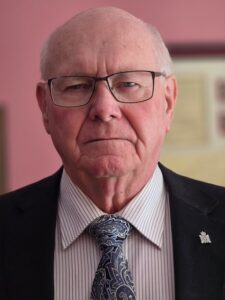
James Gough served fifteen years with the RCMP Security Service and seventeen years with CSIS. In addition he had a number of contracts with CSIS following the events of September 11th, 2001 (9/11).Most of his time, in both the Security Service and CSIS, was spent in counter espionage and foreign interference operations, with a brief stint as Chief of a Counter Terrorism section. His first contract after 9/11 was, at the request of CSIS, with Transport Canada security. As an aside, it was the person in charge of this section who authorised the planes to land at Gander after North American air space was closed following 9/11. Contracts with CSIS dealt with Foreign Intelligence and a Counter Terrorism case.
James’ introduction to the workings of the Security Service was serendipitous. The Security Service in the Division where he was posted after training, learned that he had access to someone of interest to them and his cooperation was “sought”. The operation was successful and it sparked an interest in the work. He successfully applied for the Security Service and was posted to field operations in Ottawa and to RCMP HQ. During this time he was involved in a number of operations against cold war targets which resulted in the expulsion from Canada of a number of hostile intelligence officers.
With the establishment of CSIS ( the Service, as it came to be referred to) in 1984, the offer to transfer to the new Service was readily accepted. The RCMP had been good to him and he was proud to have served, but the work to which he had devoted so much of himself was going elsewhere and he was eager for new, and some not so new, challenges in an organization specific to that work. In truth, those serving in the Security Service were already somewhat estranged given their operational distance from other members of the Force. There were of course, those who’s affiliation with the RCMP meant more to them than the work, and they stayed behind. The birth of CSIS, like any birth, was not without its issues. Some were substantial, such as Air India, but most were in day to day activity. Where once the recognizable RCMP badge gave access at a door, the “warrant card” identifying you as a member of an organization unknown to most, was a hurdle to surmount. Acquiring a safe house for agent meets, unattributable to CSIS, called for innovation. Operational backstops that the RCMP had provided were gone. Nevertheless, as time passed, the Service matured into an organization the equal to any of it’s counterparts within the Five Eyes community.
The latter years of James’ time with CSIS was as Chief of a major Counter Espionage and Foreign Interference target. The lead up to the fall of the Soviet Empire and the fall out from Tiananmen Square were situations from which counter espionage organizations benefit. Any such benefit often provides the government of those organizations with security and economic intelligence of significant value. During this time James worked in collaboration with allied services and was able to benefit CSIS through these contacts. Intelligence Officers and support staff that worked with James aquitted them selves well and the CSIS that he left was and is an organization in which he was proud to have served.
Ralph Mahar
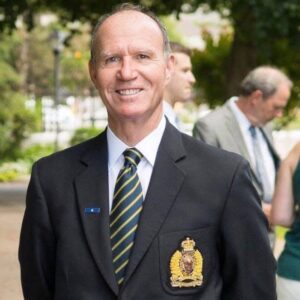 Ralph Mahar is a 34-year Veteran of the RCMP and the Canadian Security Intelligence Service. He served 5 years as a uniformed RCMP officer in the Prairies and transferred into the RCMP Security Service in 1978. With the establishment of CSIS in 1984, he transitioned into the Service where he served another 24 years in a range of operational and managerial roles in the field and national headquarters within the Security Screening, Counter Intelligence and Counter Terrorism programs. He conducted and managed agent recruitment operations, investigations, and special operations within the Service’s primary Counter-Intelligence program during the height of the Cold War from the Brezhnev era through Gorbachev’s Perestroika, the fall of the Berlin Wall, the liberation of Eastern Europe, the dissolution of the Soviet Union and the early ascendancy of Vladimir Putin.
He also served terms in a key support role as Executive Assistant to the Director, CSIS; as a Senior Manager within the Service’s primary intelligence production branch producing all-source analytical reports for domestic clients and allied agencies; as an Intelligence Advisor at Privy Council Office; as Chief Counter Terrorism of the Service’s largest regional office during the 9/11 attacks in the United States and several years as a Senior Manager managing the Service’s key operational support units conducting federally warranted physical and technical surveillance and communications intercept operations.
Following retirement from the Service, he served for four years as an Investigator conducting use-of-force investigations for the Ontario Attorney General’s Special Investigations Unit. He served six years as a civilian contractor supporting the Canadian Armed Forces (CAF) during the Afghan mission with two tours as an operations manager at Kandahar Airfield, and four deployments to Ali Al Salem Air Base, Kuwait supporting CAF capacity building and training missions in Iraq, Lebanon and Jordan (2019/20 & 2023). He also spent time in the Fort McMurray region as General Manager of a 3,500-room residential lodge of an American-owned oil production site, and as an Ottawa-based retail store manager of a major Canadian clothing outlet.
Mr. Mahar served as the national vice-president of The Pillar Society, the alumni association of formal employees of the Canadian Security Intelligence Service. For the past 4 years, he has published a weekly book review for Pillar Society members of recent non-fiction releases covering espionage, terrorism, international affairs, cyber security and biographies of operators, spies and intelligence chiefs. He continues to work as a senior administrator for the RCMP Veterans’ Association and devotes his time and energies to the welfare of Veterans and their families.
Apr 11, 2025
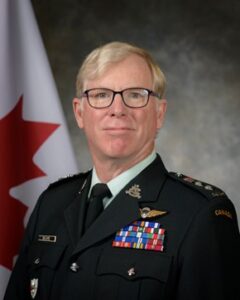
Monthly Guest Speaker at Fort Frontenac
LGen (ret’d) Stuart Beare CMM, MSC, MSM, CD |Colonel Commandant of the Intelligence Branch
In 2014 LGen Beare transitioned from 36 years of full-time service to the Canadian Armed Forces, the Canadian Army, and the Royal Regiment of Canadian Artillery. He performed in command at every level – E Battery (Para), 2nd Regiment Royal Canadian Horse Artillery, 1 Canadian Mechanized Group, Land Force Western Area, Land Force Doctrine and Training System, Canadian Expeditionary Forces Command, and lastly as Commander Canadian Joint Operations Command.
General Stu led Canadian, multi-national and multi-agency troops and forces in major domestic operations here at home (Manitoba floods, Ontario and Quebec Ice Storm, Y2K, G8/G20), and overseas during Canada’s last rotation in Cyprus (93), twice in Bosnia including a year as Commander Multi-National Brigade NW (03-04), and in Afghanistan and Deputy Commander NATO Training Mission (Police).
Since his transition in 2014, General Stu has been a member of the Canadian Red Cross Government Relations Advisory Committee, a Fellow with the Canadian Global Affairs Institute, and Honorary LCol to the 2nd Fd Regt RCA in Montreal. He remains chair of the Board for Soldiers Helping Soldiers and Patron for the Roman Catholic Military Ordinariate. In 2024 he joined the Board of Directors for Commissionaires Ottawa. He is in his 10th year serving as a Strategic Advisor for Defence to Accenture, here in Canada and as part of Accenture’s Global Defence Council.
After 20 moves as a son of a soldier and as a military family – Stu and France call Ottawa home. There they are loving this phase of life with their family of 3 Children and 8 grandchildren, and rounding out their 5 Fs with friends, faith, fitness and fun!
Apr 11, 2025
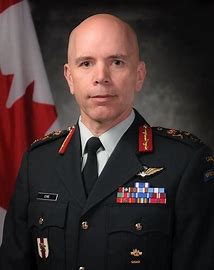
Recent Chief of Defence Staff, Gen Wayne Eyre (Ret’d) will be the Guest Speaker. He will speak to his personal experiences and challenges as the CDS as well as the key messages in his recent April 4, 2025Globe and Mail article: “The urgency is upon us: We need to defend Canada. ” Meet in the Fort Frontenac Officer’s Mess at 1830 hours. The presentation will be delivered in Korea Hall at 1900 hours
General (Retired) Wayne Eyre, CMM, MSC, CD Biography
Gen Eyre began his military journey as Army Cadet at 12 years of age, and then served in the Canadian Armed Forces (CAF) for over 40 years, finishing as the Chief of the Defence Staff (CDS).
He attended Royal Roads Military College and Royal Military College of Canada. Upon commissioning he joined the 2nd Battalion, Princess Patricia’s Canadian Light Infantry (PPCLI), and had the great privilege of spending the majority of his career in command or deputy command positions, including 3rd Battalion PPCLI, 2 Canadian Mechanized Brigade
Group, 3rd Canadian Division and Joint Task Force West, XVIII (U.S.) Airborne Corps, United Nations Command Korea, Military Personnel Command, and Commander Canadian Army.
Operationally, Gen Eyre served on many deployments at home and around the world. He commanded a rifle platoon with the United Nations Force in Cyprus; 2 PPCLI’s Reconnaissance Platoon with the UN Protection Force in Croatia (including the Battle of Medak Pocket); a rifle company with NATO’s Stabilization Force in Bosnia; the Canadian Operational Mentor and Liaison Team in Kandahar, Afghanistan; as the Commanding General of NATO Training Mission – Afghanistan; and as the first non-U.S. Deputy Commander of United Nations Command Korea in its 69 year history, and as such was the
most senior Canadian officer ever permanently stationed in the Asia Pacific region.
Gen Eyre assumed the CDS role on February 24, 2021, and finished on July 18, 2024. As the commander of the CAF and military advisor to the Prime Minister and Cabinet, he led Canada’s military through an unprecedented confluence of international and domestic crises and rapidly evolving security stressors, which together he has characterized as a turning point in history.
Amongst others, Gen Eyre is a graduate of the U.S. Army Special Forces Qualification Course, the U.S. Marine Corps Command and Staff College, the U.S. Marine Corps School of Advanced Warfighting, and the U.S. Army War College. He holds a Bachelor of Science and three master’s degrees (Military Studies, Operational Studies and Strategic Studies).
His decorations include the Commander of the Order of Military Merit, the Meritorious Service Cross, the Commander-in-Chief Unit Commendation, the Chief of the Defence Staff Commendation, the Order of National Security Merit from South Korea, the National
Order of the Star of Romania in the rank of Commander, the French National Order of Merit in the rank of Commander, the Cross of Honour of the German Armed Forces in Gold, the Latvian First Class of the Order of Viesturs, and was four times awarded the U.S. Legion of Merit, including two in the rank of Commander.
Apr 11, 2025
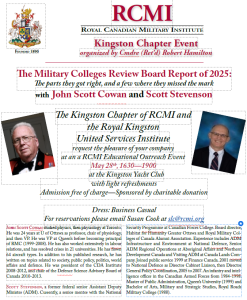
RKUSI will partner with RCMI Kingston and host a panel discussion from 1630 to 1900 hours at the Royal Kingston Yacht Club. Scott Stevenson, Chair of Advocacy and Promotion for the RMC Alumni Association and the former RMC Principal, Dr. John Scott Cowan will discuss the recent Canadian Military Colleges (CMC) Review Board report. Details as follows:
RCMI Kingston and RKUSI are collaborating in hosting the event.
Topic – Report of the Canadian Military Colleges Review Board
Speakers. Scott Stevenson, Chair of the Advocacy and Promotion Committee for the RMC Alumni Association, and former Principal of RMC John Cowan
Dress – Casual
Food– hors d’oeuvres courtesy of John Cowan and RCMI
Timing – 1630 to 1900 hours
Location – Kingston Yacht Club
Registration -if interested in participating, contact Ron Blank at tumblingdice54@icloud.com
